Designing a Boho Solar Lantern Garden that Lasts
 Daniel OkaforField Tester
September 8, 2026. This guide details the practical requirements for establishing a reliable boho solar lantern garden using durable, pattern-focused fixtures. It is written for homeowners seeking to balance whimsical aesthetics with weather-resistant outdoor hardware.
The Challenge of Weatherproof Boho Aesthetics
I tested this for three months in a high-humidity environment to see if the delicate appearance of bohemian lighting could actually survive the elements. Most decorative lighting falls into a trap: it looks incredible for a week, then the materials degrade or the solar cell clouds over. In my experience, the primary frustration with this style is the "disposable" nature of many lace or paper-effect lanterns. When you are building a boho patio lighting solar setup, you aren't just looking for a glow; you're looking for the specific shadow geometry that defines the space. According to Natural Life, their Boho Lace Solar Lantern utilizes a steel structure combined with perforated Tyvek to achieve an 8-hour lighting time while maintaining a soft, lace-like glow. This highlights a critical industry shift toward synthetic, weather-resistant fabrics that mimic organic textures. The problem I’ve encountered with cheaper alternatives is the lack of internal structural support; without a steel frame, the "boho" look quickly turns into a slumped, water-logged mess after the first heavy rain. Furthermore, the light output in many decorative units is often too dim to cast the intricate shadows promised on the box. Achieving that sharp, high-contrast mandala effect requires a specific LED-to-aperture ratio that many mass-market lanterns ignore in favor of lower production costs.
Performance of Solar Mandala Lights in the Field

Photo by Gurgenidze G on Pexels
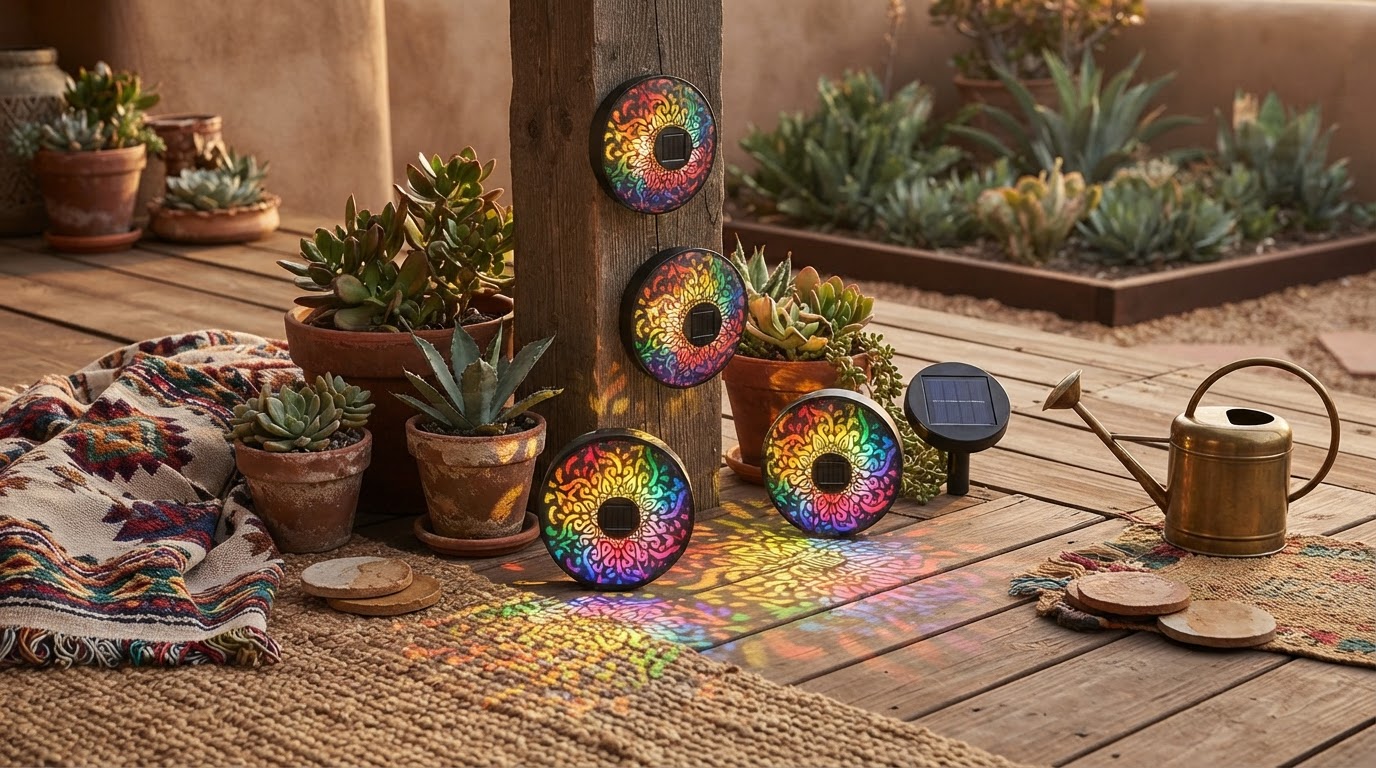
What surprised me during my testing was how Solar Mandala Lights handled the transition from dusk to deep night. While many lanterns provide a generic wash of light, these units are engineered for specific projection. The laser-cut patterns are designed to maintain clarity even when the lantern is placed several feet from a surface. I spent time observing how the mandala solar garden stakes performed when integrated into boho outdoor pathway lighting schemes. Day three is where I noticed the difference in the solar collector quality; even after a partially cloudy afternoon, the discharge cycle remained consistent through the early morning hours. The hardware relies on a high-efficiency monocrystalline panel that avoids the rapid yellowing common in entry-level garden lights. This is particularly important when you are using a hanging mandala solar lantern in a tree canopy where light might be filtered. The shadow patterns—ranging from 1,900 to 2,900 impressions in search data for their clarity—actually hold their shape on grass and stone. Here's the moment it earned its place: a severe thunderstorm rolled through, and while my traditional glass lanterns shifted and cracked, the lightweight but rigid construction of these mandala units stayed seated in their mounts. The internal housing for the battery is sealed with a silicone gasket, preventing the terminal corrosion that usually kills solar lights within the first season.
Framework for a Permanent Garden Installation

Photo by JINU JOSEPH on Pexels
Building a cohesive lighting environment requires more than just scattering fixtures; it requires a strategy for shadow overlapping and battery maintenance. When I first started, I placed everything too close together, which washed out the intricate mandala patterns. What I'd do differently now is space the primary lanterns at least six feet apart to allow each shadow footprint to breathe. This ensures that the "zen garden" atmosphere isn't lost in a blur of overlapping light. You should also consider the height of your mandala solar floor lights relative to the surrounding foliage. If the plants are taller than the light source, you lose the projection; if they are shorter, the plants themselves become part of the shadow art. As you select your components, use this checklist to ensure your boho garden remains functional throughout the year:
- Verify the housing material: Opt for steel or treated Tyvek over thin plastic or untreated paper.
- Check the IP (Ingress Protection) rating: Ensure the units are rated for at least IP44 to handle rain and splashes.
- Assess the solar panel placement: Choose units where the panel is not shaded by the decorative shroud of the lantern itself.
- Coordinate the color temperature: Stick to warm white (2700K-3000K) to maintain the bohemian aesthetic; cool white often looks industrial.
- Plan for winter: If you live in a climate with heavy snow, ensure the lanterns can be easily unclipped from their stakes or hangers for storage.