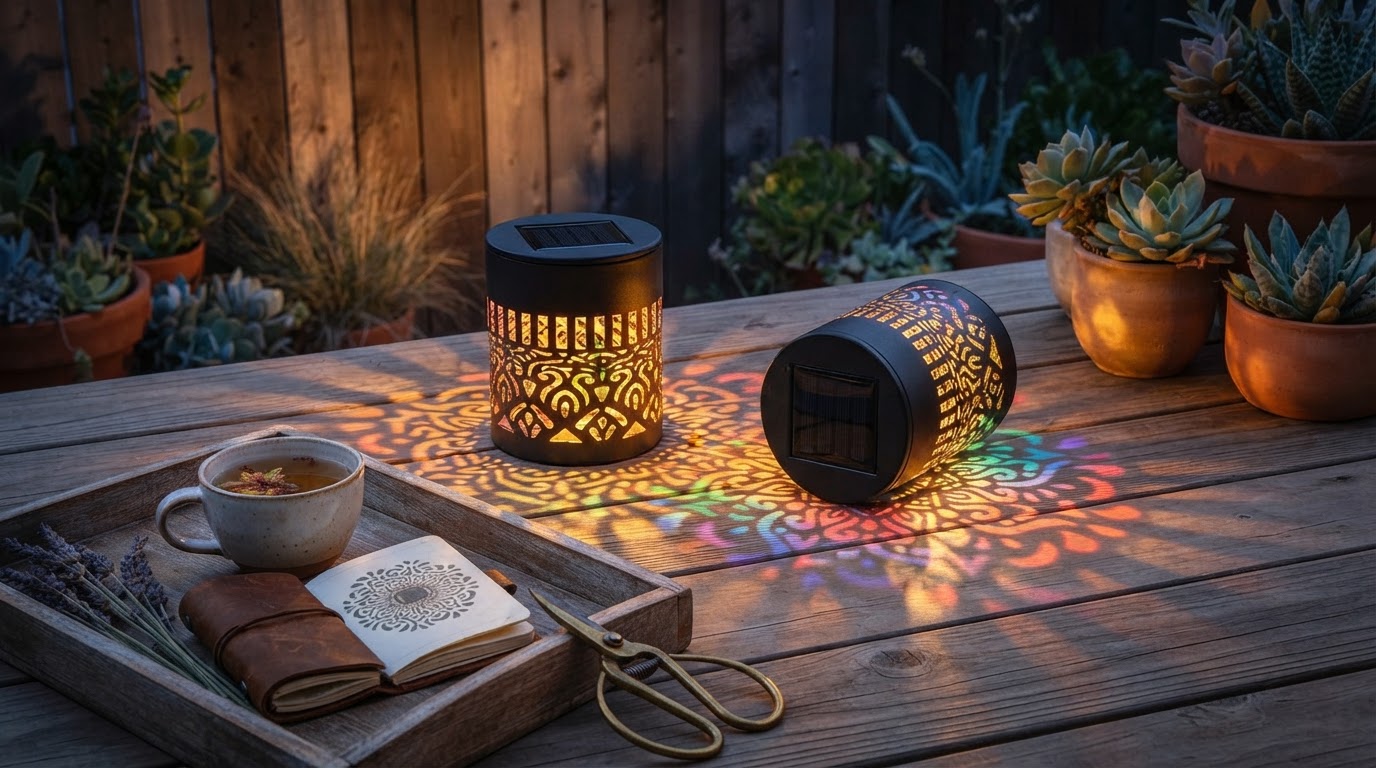
Designing Immersive Gardens with Solar Mandala Lights
 Maya ChenContributing Editor
September 15, 2026. This analysis examines the technical application of shadow-casting fixtures in residential landscape architecture. It is written for homeowners and designers seeking to move beyond basic visibility toward intentional environmental ambiance.
The Architecture of Negative Space in Lighting
The conventional wisdom says that outdoor lighting should focus on high-lumen output and broad coverage to ensure safety and visibility. This approach frequently results in over-lit, sterile environments that erase the natural textures of a garden after dark. According to Attraction Lights, a Netherlands-based design firm, the most compelling streetscapes and residential designs utilize "shadow patterns" to create visual interest. The industry consensus often prioritizes functional illumination, yet this ignores the psychological impact of pattern and contrast. When light is treated merely as a utility, the opportunity for architectural depth is lost. Here's the part nobody talks about: high-intensity floodlighting actually reduces spatial perception by flattening surfaces. By contrast, shadow-casting fixtures utilize the absence of light to define boundaries and movement. In small urban gardens, this technique is particularly effective, as noted by Pinterest design trends which suggest that patterned lights can add visual interest to even the most restricted spaces. This shift toward decorative shadow pattern solar lights represents a move away from the 'more is better' philosophy of lumen count toward a more sophisticated understanding of light as a medium for shadow. The goal is not just to see where one is walking, but to experience a transformed environment where the ground and walls become a canvas for geometric art. This is a departure from traditional projection pattern walkway lights that often focus on simple circular beams rather than complex, culturally-inspired silhouettes.
Technical Implementation of Solar Mandala Lights
Solar Mandala Lights address the limitations of standard landscape lighting by integrating laser-cut geometry directly into the light housing. While many budget fixtures rely on plastic lenses that diffuse light into a blurry glow, these units utilize specific cut-outs to project high-contrast mandala designs onto the surrounding surfaces. This is not merely decorative; it is a controlled application of light. For those managing a boho garden decor solar lights project, the quality of the projection depends entirely on the proximity to the surface and the clarity of the LED source. The market is saturated with low-quality stakes that fail to maintain pattern integrity beyond a few inches. However, real-world data from the Shadow Dance Solar Landscape Lights suggests that when designed correctly, solar-powered units can provide a hardwired-free method to illuminate dark corners with distinct silhouettes. Run the math: a standard 10-lumen solar stake provides basic guidance, but a mandala-style light requires a specific LED placement to ensure the 1200 to 2900 impressions of light patterns (as seen in consumer search trends) are crisp and not distorted. These fixtures are frequently utilized as mandala garden stake lights to line pathways where the transition between light and shadow creates a rhythm for the pedestrian. The transition from a solar moon mandala path light to a standard light is jarring because the mandala light engages the viewer's peripheral vision through intricate geometry. This is particularly relevant for outdoor mandala projection lights where the light is intended to interact with organic textures like grass, gravel, or stone. The technical success of these lights lies in their ability to serve as statement sculptures during the day and dynamic art pieces at night, a dual-purpose function championed by high-end firms like Solaz Designs.
A Framework for Shadow Pattern Selection
Selecting the right fixture requires a departure from the 'buy by the dozen' mentality that plagues the solar lighting industry. To achieve a professional result with shadow pattern outdoor lights, one must evaluate the installation site based on the surface's reflective properties and the desired pattern density. A light that looks excellent on a smooth concrete patio may lose its detail when placed in tall fescue grass. Before purchasing, consider this decision framework to ensure the light serves the architecture of the space:
- Surface Texture: Opt for flat, light-colored surfaces like pavers or light-grey stone to maximize the contrast of the mandala projection.
- Placement Height: Ensure the stake height allows for a wide enough throw to display the full geometric pattern without excessive distortion at the edges.
- Lumen Quality: Look for clear-casing LEDs that prioritize directional beam strength over omnidirectional glow to keep shadows sharp.
- Pattern Complexity: Match the mandala density to the garden style; highly intricate patterns suit Zen or Boho themes, while simpler geometries work for modern minimalist settings.
- Consistency: Use identical patterns along a single visual plane to avoid a cluttered, chaotic aesthetic that distracts rather than relaxes.
Shop Solar Mandala Lights here