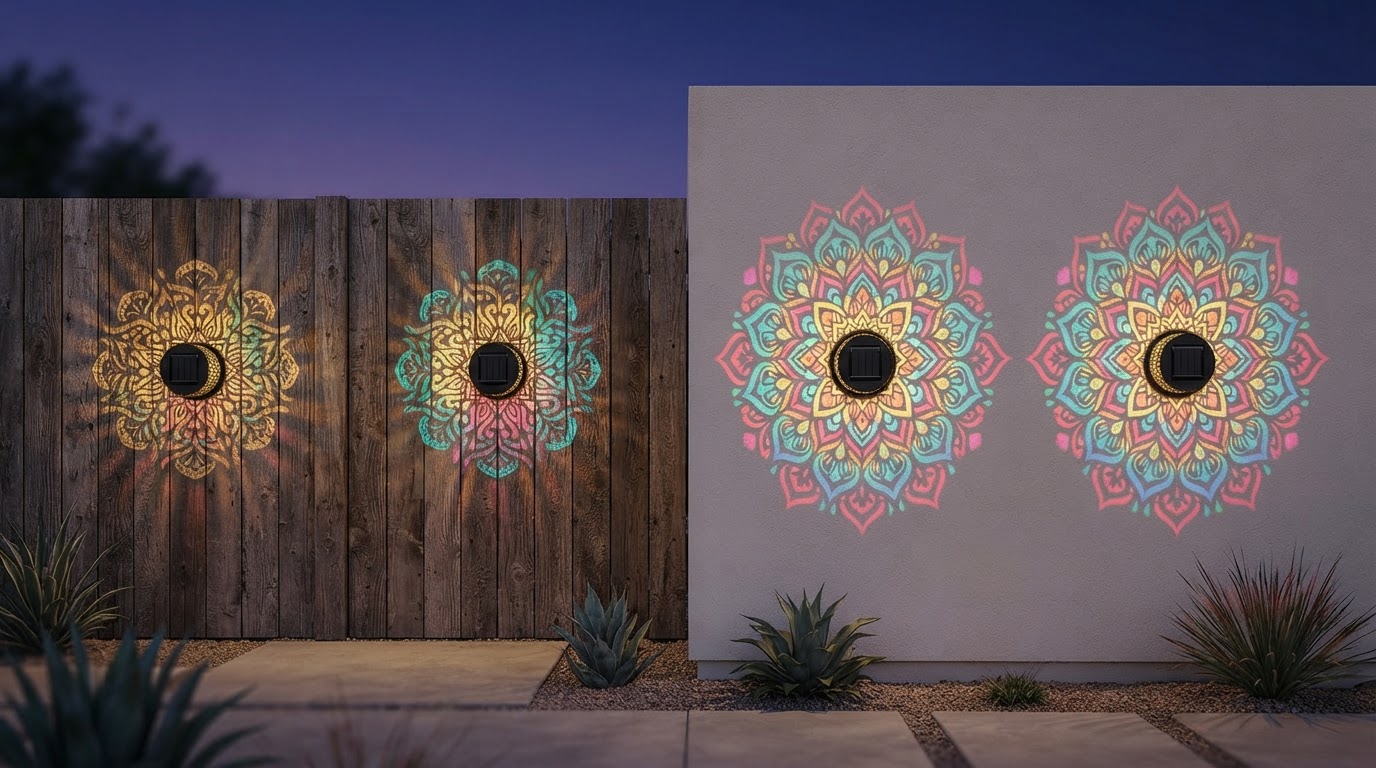
Solar Mandala Lights: Evaluating Outdoor Lantern Performance
 Maya ChenContributing Editor
October 22, 2026 — The shift toward atmospheric garden lighting has reached a saturation point with the rise of Solar Mandala Lights, moving beyond mere illumination into the realm of projection art. While the conventional wisdom says that any solar lantern will provide adequate ambiance, the technical reality of shadow-pattern projection requires specific engineering often overlooked by casual buyers.
The market for these fixtures is currently divided between high-precision laser-cut housings and cheaper, stamped plastic alternatives that fail to maintain pattern clarity over time. According to data from NextGenGardening, high-quality decorative solar lights typically emit a soft 10-lumen warm yellow glow designed specifically to project detailed mandala patterns onto surrounding surfaces rather than flooding the area with harsh light. This distinction is critical; higher lumen counts often wash out the intricate geometry that defines the mandala aesthetic, effectively defeating the purpose of the design.
The Three Technical Benchmarks
Here's the part nobody talks about: the relationship between the light source placement and the aperture geometry determines whether your patio looks like a zen retreat or a blurry mess. To achieve a crisp projection, the LED must be centered perfectly within the housing. When evaluating Solar Mandala Lights, the primary performance metric is the throw distance of the shadow. A standard 10-lumen output, powered by a 1.2V Ni-MH battery, generally provides a projection radius of three to five feet. However, run the math on the recharge cycles: a standard 600mAh battery requires approximately six to eight hours of direct sunlight to provide a consistent eight-hour nighttime runtime. Anything less results in a visible dimming of the mandala pattern after midnight. Durability is another area of contention; while many products claim weather resistance, an IP44 rating is the bare minimum for surviving seasonal rain. The construction material—typically bronze-finished metal or waterproof plastic—must resist oxidation to prevent the projection apertures from clogging with debris or rust. For those seeking alternatives to lanterns, mandala garden stakes solar offer a different elevation profile, while unique solar gifts for gardeners outdoor often prioritize aesthetic form over these rigorous projection metrics.
Expert tip: To maximize the clarity of the projected geometry, place your lantern exactly 24 inches away from a flat, light-colored vertical surface like a fence or wall; increasing this distance beyond 48 inches will cause the diffraction of the 10-lumen source to soften the edges of the mandala beyond recognition.
Selecting the right fixture depends on whether you value the physical object or the light it casts. While mandala garden stakes solar provide localized ground interest, the hanging lanterns remain the standard for architectural shadow work. I’ll change my mind when manufacturers move toward higher-density lithium-ion cells in these decorative formats to sustain peak brightness throughout the entire lunar cycle, rather than relying on the current Ni-MH standard that fades by dawn. For those integrating these into a larger landscape plan, finding unique solar gifts for gardeners outdoor requires balancing these technical specs with the desired visual impact.
Sources
- Mandala Solar Fence Lights Outdoor Solar Step Wall Lamp Garden ... - Etsy
- Solar Mandala Lantern - Bronze - Natural Life
- Solar Powered Mandala Lights Turn Backyard Into Magical Night Art