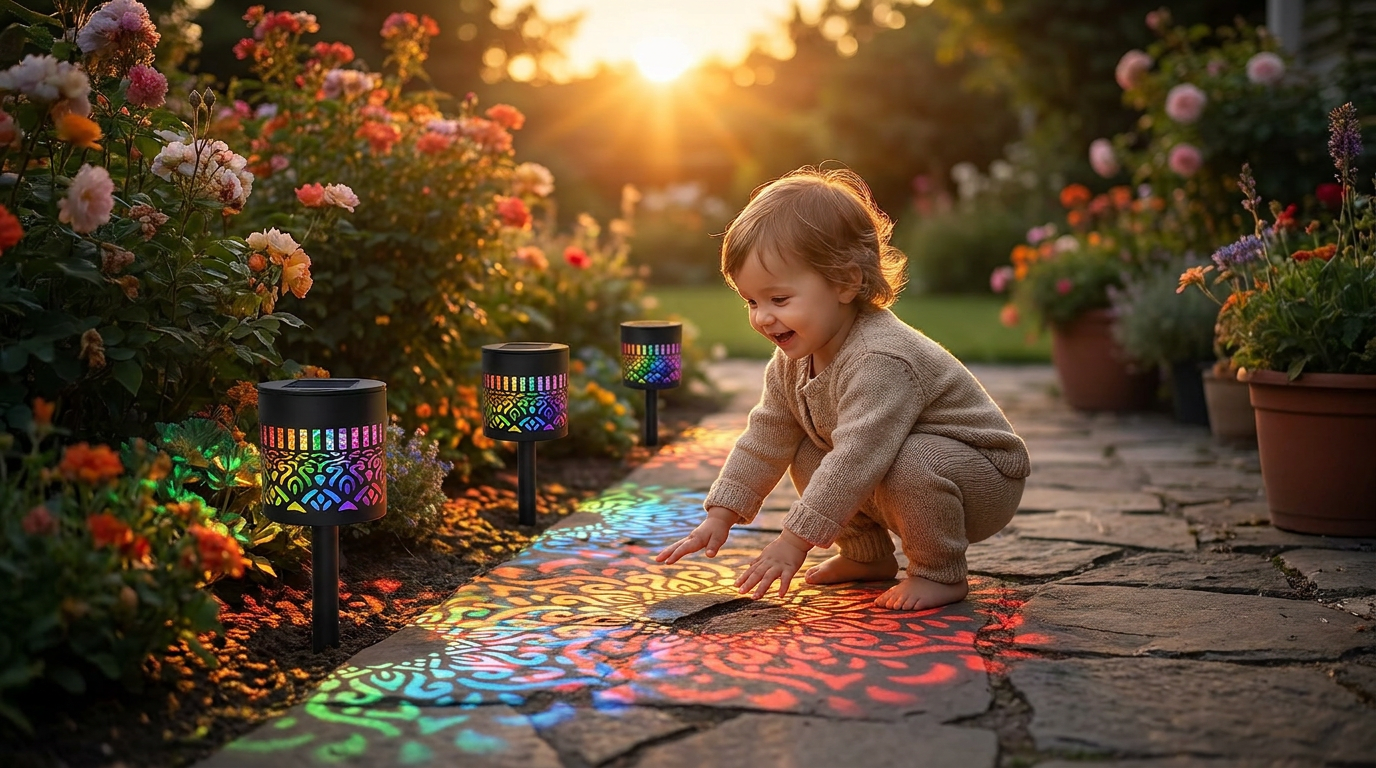
How do I install Solar Mandala Lights for path patterns?
 Sam VasquezBuying Guide Lead
June 24, 2026 — Installing Solar Mandala Lights requires placing the units on flat, high-contrast surfaces with zero overhead obstruction to ensure the LED projections remain sharp and the internal batteries reach a full charge.
Homeowners often ask this because standard solar stakes frequently fail to throw a visible pattern or die out within hours. I find that most people are looking for that specific "boho garden decor solar lights" aesthetic seen on social media, but they struggle with the physics of light projection on uneven turf or mulch.
Which mounting style creates the best path pattern?
Between the stake-mounted versions and the flat-base lanterns, I'd go with the stake-mounted Solar Mandala Lights for traditional garden paths. The elevation provided by a 10-to-12-inch stake allows the light to spread further, creating a wider radius for the geometric shadows. If you're on a budget, you might be tempted by simple plastic solar disks, but those lack the internal housing necessary to focus light through a stencil. According to a product demonstration on Instagram by user accounts highlighting garden transformations, these solar mandala lights are designed to charge during the day and activate automatically at dusk, making the installation a one-time physical task without ongoing maintenance. Skip this if your path is heavily shaded by a dense tree canopy; the amorphous shadows from leaves will blur the intricate mandala patterns you're trying to achieve.
How do I optimize the light projection on different surfaces?

Photo by JUNLIN ZOU on Pexels
To get a crisp projection, you must install the lights approximately 3 to 5 feet apart and ensure the ground surface is relatively uniform. Here's what I'd actually buy: the warm white LED variants, as they tend to provide higher contrast against grey concrete or dark mulch than the color-changing RGB versions. A listing on Etsy for Mandala Solar Fence Lights notes that these units often feature intricate floral cutouts, which require a stable mounting angle to prevent the pattern from looking elongated or distorted. I've found that placing them on the edge of a gravel path works significantly better than placing them in tall grass, which breaks up the light rays. If you are integrating these into a broader layout, mapping solar mandala lights for path and garden design is essential to avoid "light pollution" where overlapping patterns cancel each other out.
Quick answers
Q: How many hours of sunlight do Solar Mandala Lights need? A: Most units require at least 6 to 8 hours of direct, unshaded sunlight to power the LED throughout the night. If the solar panel is partially blocked by a fence or shrub, the pattern brightness will noticeably degrade after only 2 hours of operation.
Q: Can these lights be installed on wooden fences? A: Yes, specific models like the Solar Sun, Moon, and Stars LED Wall Lights are designed with rear mounting brackets for vertical installation. These are ideal for narrow side-yards where ground space is limited but vertical pattern projection is desired.
Q: Do Solar Mandala Lights work in the rain? A: These lights typically carry an IP44 or IP65 waterproof rating, meaning they are sealed against rain and dust. However, you should avoid installing them in low-lying areas of the garden where standing water might submerge the stake base.
For more detailed layout strategies, see how solar mandala lights transform garden paths or check our guide on mandala path lights solar for specific model comparisons.
Learn more about Solar Mandala Lights at https://solarmandalalights.com.
Sources

Photo by Star Zhang on Pexels
- Mandala Solar Fence Lights Outdoor Solar Step Wall Lamp ... - Etsy
- My fence looked a little boring… until these These solar mandala ...