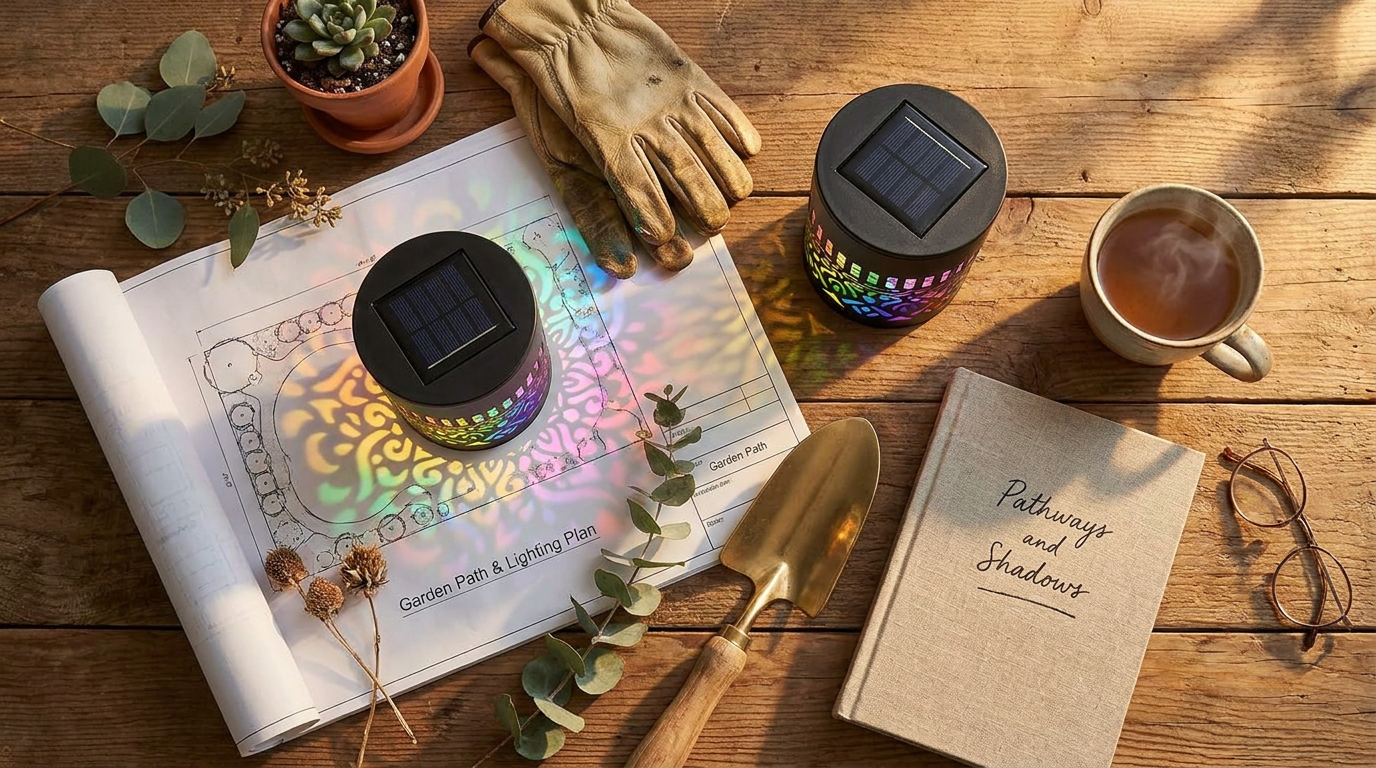
Mapping Solar Mandala Lights for Path and Garden Design
 Priya RamanSenior Analyst
June 20, 2026. This analysis examines the technical and aesthetic integration of patterned projection lighting within residential landscape architecture. It is designed for homeowners and landscape designers seeking to balance functional path illumination with atmospheric shadow work.
To evaluate these fixtures effectively, think of it as a matrix of light intensity versus shadow complexity. When planning a garden layout, two axes matter here: the lumens required for safety and the geometric density of the pattern projection. Traditional path lights prioritize a broad, flat throw of light to prevent tripping hazards. However, modern outdoor design has shifted toward 'shadow scaping,' where the light source itself is a secondary feature to the patterns it casts on the ground. According to a report by Etsy regarding Mandala Solar Fence Lights, these fixtures often utilize intricate floral cutouts to transform a standard functional object into a decorative projection tool. This shift addresses a common void in garden design where nighttime spaces feel flat or uninviting. By utilizing a radial mandala pattern, the light creates a focal point that naturally draws the eye along a walkway, solving the problem of visual stagnation in dark outdoor corridors. This approach is particularly effective for those searching for mandala garden stake lights, as the elevation of the stake dictates the diameter of the projected pattern.
Solar Mandala Lights address these landscape challenges by utilizing high-efficiency photovoltaic cells integrated directly into the housing of the lamp. Unlike standard lanterns that may produce a generic glow, these units are engineered specifically for shadow projection, often referred to in design circles as solar lanterns for patio pattern effects. The internal LED is positioned at a precise focal point relative to the metal cutouts to ensure the mandala geometry remains crisp rather than blurred. This technical precision is essential when installing mandala path lights solar along narrow walkways where the pattern must fit the width of the paving. For those managing larger perimeters, incorporating mandala path lights solar allows for a repeatable motif that provides rhythm to the landscape. As noted in a demonstration on Instagram by user @solar_mandala, these lights operate on an automated cycle, charging during daylight hours and activating at dusk without manual intervention or external wiring. This autonomy makes them an ideal solution for remote garden areas where trenching for electrical lines is cost-prohibitive. Furthermore, the use of mandala path lights solar ensures that even in winter months, the garden maintains a structural visual interest through light even when foliage is dormant. Integrating mandala path lights solar into a cohesive plan requires understanding how the light interacts with different surfaces—wood decking will absorb more light, while light-colored stone will reflect and sharpen the mandala's intricate lines.
The decision rule for selecting the appropriate fixture depends on the surface area you intend to cover and the existing ambient light levels of your neighborhood. Once you see it this way, the selection process becomes a matter of matching the light's throw to the physical constraints of your path. When choosing your Solar Mandala Lights, utilize the following framework to ensure optimal placement and performance:
- Assess the solar exposure of the installation site to ensure at least six hours of direct sunlight for maximum pattern clarity.
- Measure the path width to verify that the mandala projection will not be truncated by high grass or vertical obstructions.
- Coordinate the finish of the housing with existing hardware, such as the black solar-powered wall lights often paired with mandala path lights solar for a unified aesthetic.
- Evaluate the kelvin temperature of the LED; warmer tones typically enhance the boho garden decor solar lights aesthetic found in trending outdoor themes.
- Determine the height of the stake based on whether you want a concentrated, bright pattern or a larger, more diffused shadow projection.
Shop Solar Mandala Lights here: https://solarmandalalights.com
Sources
Photo by Kim Lawrie on Pexels
- Mandala Solar Fence Lights Outdoor Solar Step Wall Lamp ... - Etsy
- My fence looked a little boring… until these These solar mandala ...