How to Light a Meditation Space With Solar Mandala Lights
 Priya RamanSenior Analyst
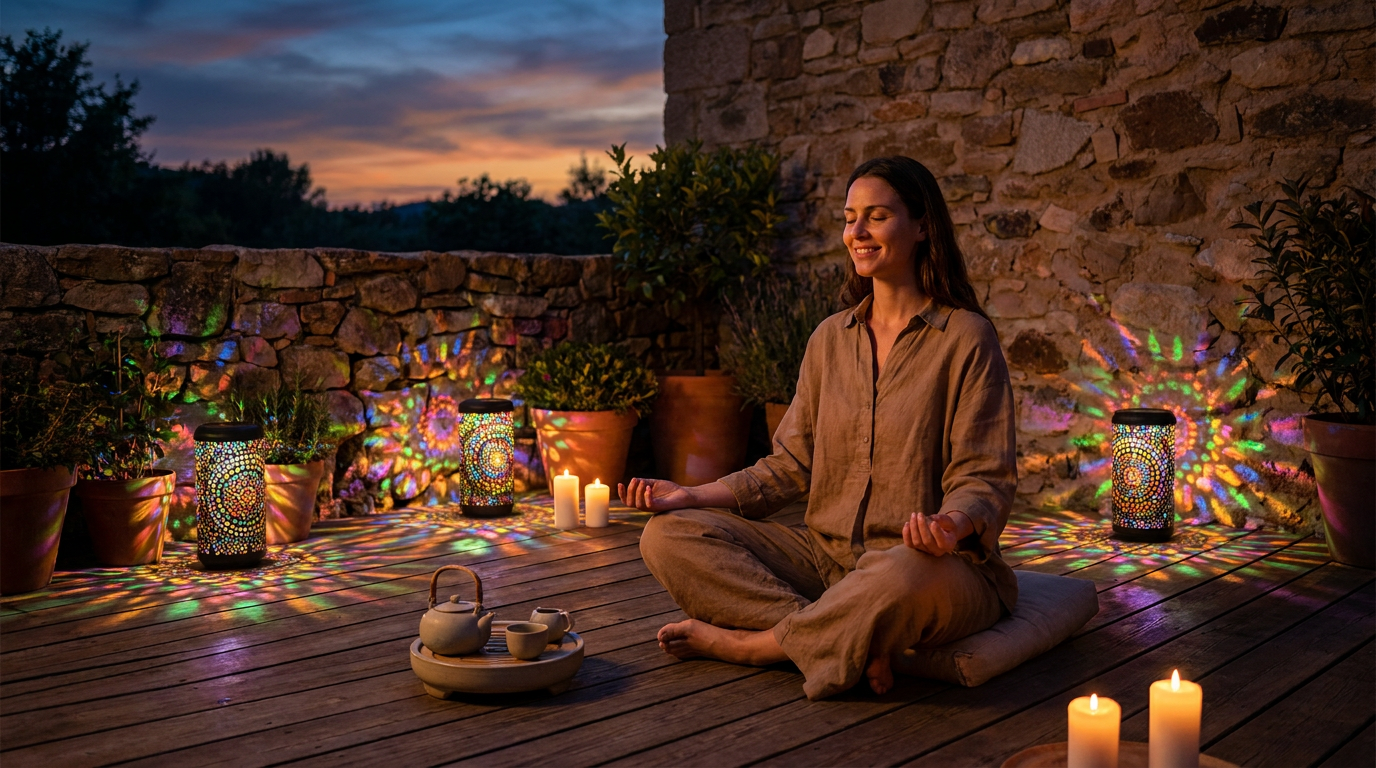
July 3, 2026 — Designing an outdoor meditation space with Solar Mandala Lights requires a balance of luminosity and shadow to facilitate deep focus and psychological calm.
Creating a functional mindfulness area outdoors involves more than simple illumination; it is about managing sensory input to foster internal stillness. Homeowners frequently seek ways to define these boundaries without the harsh glare of traditional floodlights or the maintenance of wired systems. By utilizing Solar Mandala Lights, a space can be transformed into a sanctuary that transitions naturally from daylight to dusk.
Think of it as a matrix of two primary axes: light intensity and pattern complexity. The decision rule is to utilize high-pattern complexity at low intensity to ground the visual field during evening practice.
How does shadow projection enhance outdoor meditation?
Shadow projection creates a visual anchor that reduces environmental distractions by providing a rhythmic, geometric focal point. According to design principles highlighted by Hineighbor, soft, warm lighting is essential for creating an inviting atmosphere that encourages serenity during mindfulness exercises. Solar Mandala Lights achieve this by projecting intricate sacred geometry onto the ground or nearby surfaces, effectively "zoning" the meditation area without physical walls.
Research into environmental psychology suggests that specific patterns can lower cortisol levels. When these lights are placed strategically, they act as a visual mantra. Once you see it this way, the light becomes a tool for concentration rather than just a utility. By choosing patterns that mimic natural fractals, the meditation space remains harmonized with the surrounding landscape, a technique often utilized in a zen garden solar decor to maintain aesthetic fluidity.
Where should Solar Mandala Lights be placed for optimal focus?

Photo by quang vinh on Pexels
Placement should follow a three-point perimeter strategy to ensure the practitioner is surrounded by soft light without being blinded by a direct source. Glow Furniture Factory suggests that LED lighting in meditation spaces should be durable and energy-efficient, often recommending floor-level sources to keep the eye line clear. Positioning mandala solar garden stakes at the corners of a meditation mat or platform creates a "circle of light" that defines the sacred space.
Two axes matter here: the height of the stake and the proximity to a reflecting surface. A higher stake will cast a wider, more diffused pattern, while a lower stake creates a sharp, high-contrast mandala directly on the grass or stone. For those integrating these into a larger landscape, placing them near zen garden solar decor elements like sand or smooth pebbles can amplify the projection's clarity. Serwall Outdoor suggests using diffused light to simulate natural transitions, which solar-powered units do automatically as they activate at twilight.
Quick answers
Q: Can Solar Mandala Lights be used in small balcony meditation spaces? A: Yes, these lights are highly effective in confined areas where the 360-degree projection can reflect off walls to create an immersive environment. Their compact footprint makes them ideal for spaces smaller than 50 square feet.
Q: How long do Solar Mandala Lights typically stay illuminated for night meditation? A: Most high-quality Solar Mandala Lights provide 8 to 10 hours of illumination after a full day of sun exposure, ensuring the space is ready for both late-evening and pre-dawn sessions.
Q: Are these lights weather-resistant for year-round outdoor use? A: Solar Mandala Lights are typically rated IP65 or higher, meaning they are protected against rain and dust, which is necessary for maintaining a permanent outdoor meditation sanctuary.
Learn more about Solar Mandala Lights at https://solarmandalalights.com.
Sources

Photo by 🇻🇳🇻🇳Nguyễn Tiến Thịnh 🇻🇳🇻🇳 on Pexels
- Designing an Outdoor Meditation Space - YouTube
- Discover Serenity: Creating Your Perfect Outdoor Meditation Space
- Create the Perfect Outdoor Meditation Space - Full Guide