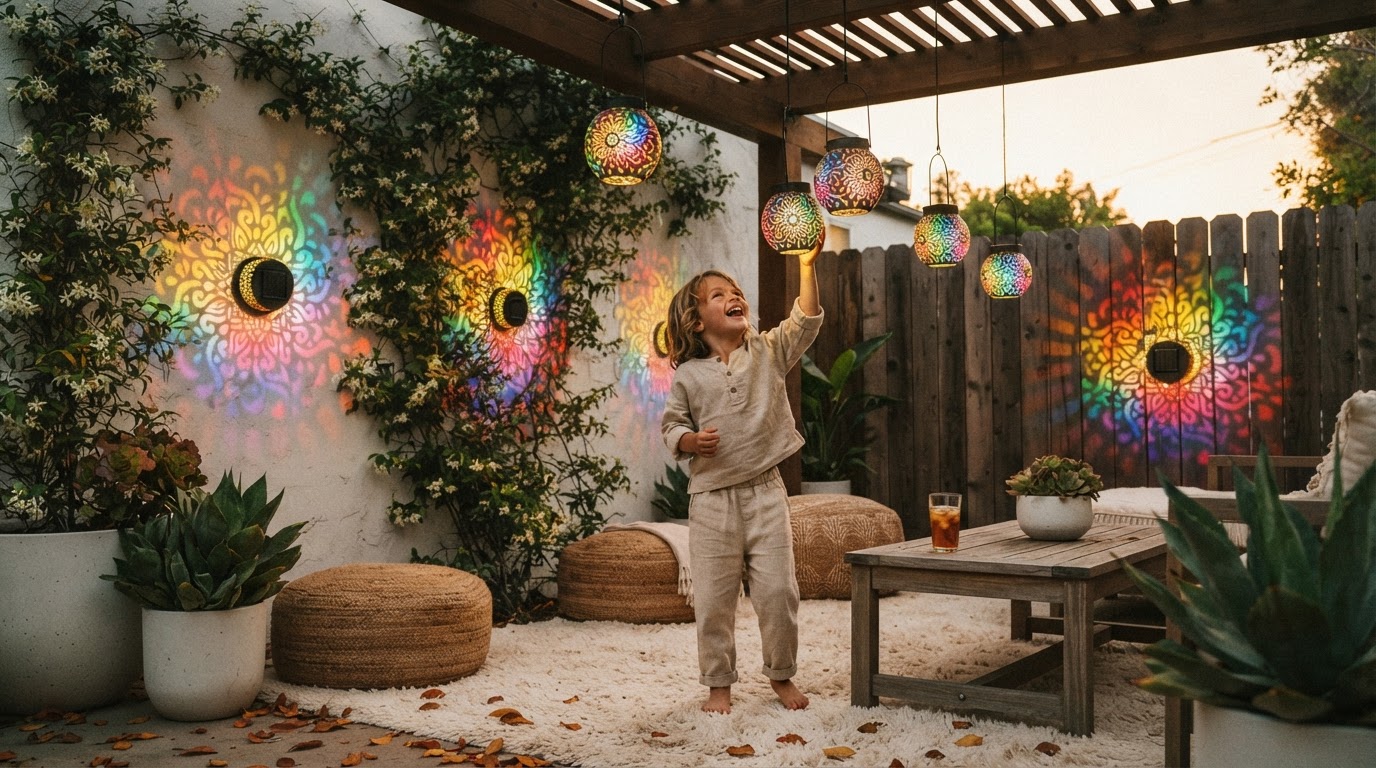
5-Point Setup for Solar Mandala Lights Hanging Lanterns
 Priya RamanSenior Analyst
September 9, 2026 — The rising demand for shadow-pattern projection in landscape design has positioned Solar Mandala Lights as a primary choice for homeowners seeking to blend artistic geometry with sustainable energy. As outdoor living spaces evolve into evening retreats, the placement of these hanging lanterns determines whether the intricate patterns achieve their intended depth or simply fade into the darkness.
While many homeowners focus solely on aesthetics, successful installation requires balancing solar exposure with the physics of light projection. According to a product showcase by LuxArts, these lanterns utilize upgraded solar panels for fast charging, making them ideal for year-round decorative use in patios and porches. To maximize this technology, think of it as a matrix of height, surface texture, and ambient light interference. When these variables align, the laser-cut metal housing transforms from a simple garden ornament into a high-contrast projection tool.
The 5-Point Setup Framework
Optimizing a hanging Solar Mandala Light requires a systematic approach to placement. Two axes matter here: the vertical distance from the ground and the horizontal proximity to a projection surface. The first check is the Charging Path; the integrated solar panel requires unobstructed access to UV rays for 6 to 8 hours to ensure a full discharge cycle at night. The second check involves the Projection Surface. A flat, light-colored patio or a uniform wooden deck acts as a blank canvas, whereas grass or gravel will diffuse the mandala pattern and reduce clarity. Third, consider the Suspension Height. Hanging the lantern too high (above 7 feet) causes the light intensity to drop significantly before reaching the ground, while hanging it too low limits the diameter of the pattern. The fourth point is the Wind Factor. Because these lanterns are lightweight, they should be secured to stable branches or sturdy hooks to prevent the pattern from constantly shifting, which can be visually jarring. Finally, the Ambient Light check ensures that nearby streetlights or security floodlights do not wash out the shadow projection. In terms of technical performance, these units typically feature a seven-color transition mode and waterproof housing, designed to operate automatically from dusk until dawn once the battery reaches capacity.
Expert tip: To achieve the crispest shadow definition, ensure the lantern is positioned exactly 3 to 4 feet above the primary viewing surface; increasing this distance beyond 5 feet will soften the edges of the mandala geometry due to the inverse square law of light.
Effective placement is a core component of Designing a Boho Solar Lantern Garden that Lasts. When integrating these into a broader scheme, they should complement Boho Outdoor Pathway Lighting to create a layered effect. For those focusing on texture, these hanging units provide a vertical counterpoint to Boho Patio Lighting Solar installations. The decision rule: if the goal is atmosphere, prioritize height; if the goal is detail, prioritize proximity to a flat surface. This methodology ensures your Boho Patio Lighting Solar setup remains functional and visually striking throughout the seasons.
Sources

Photo by Mehmet Kaya on Pexels
- Mandala Solar Fence Lights Outdoor Solar Step Wall Lamp Garden ... - Etsy
- My fence looked a little boring… until these These solar mandala lights ...
- Outdoor Mandala Projection Light I'm gonna need this immediately!