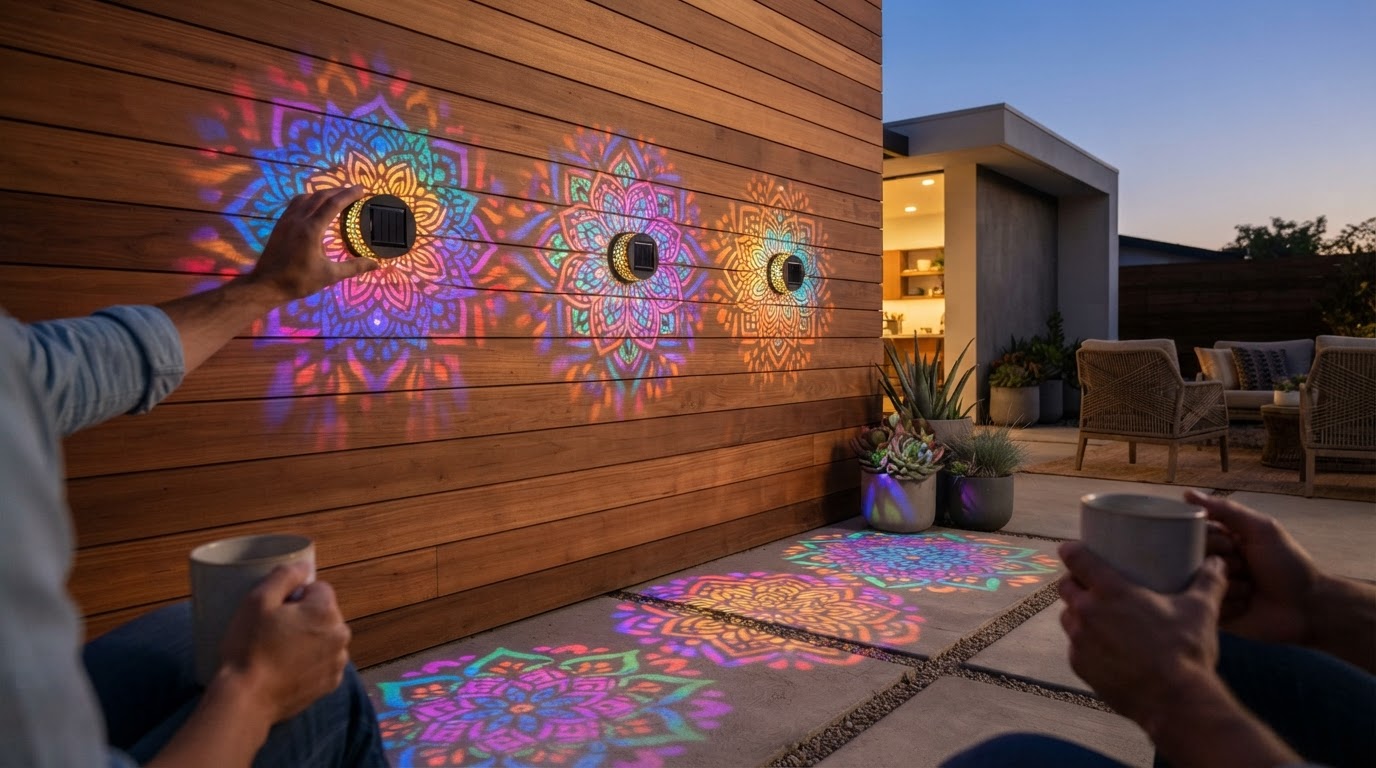
Do Solar Mandala Lights create sharp shadow patterns?
 Sam VasquezBuying Guide Lead
October 3, 2026 — Solar Mandala Lights produce high-contrast, geometric shadow patterns when the internal LED is positioned as a single point source within a laser-cut housing.
I often see homeowners asking if these decorative lights actually project clear patterns onto the ground or if they just look like blurry blobs. The clarity of the projection depends entirely on the distance between the light source and the surface, as well as the precision of the cutouts. People looking for a "boho" or Zen garden aesthetic usually want these to serve as both functional pathway markers and ambient art.
How does the light source affect shadow clarity?
The sharpness of a shadow pattern is determined by the size and intensity of the LED filament inside the Solar Mandala Light. A single, high-intensity LED chip creates a crisp silhouette because the light rays originate from a centralized point, whereas multiple low-quality LEDs tend to overlap and wash out the design. According to Solaz Designs, these types of lights function as dynamic art pieces, acting as statement sculptures during the day and intricate shadow projectors at night. If you're on a budget, you might find cheaper plastic versions, but the shadows often look muddy because the material is too thick, diffusing the light before it hits the ground. Between these two, I'd go with a metal laser-cut housing every time; the thinness of the metal allows for a much cleaner break between light and dark. Skip this if you are trying to light a large area for safety, as these are designed for atmosphere rather than high-lumen visibility.
Where should you place shadow pattern solar lights for the best effect?
To get the most defined mandala patterns, you need to place the lights within two to four feet of a flat, light-colored surface like a concrete walkway, a light wooden deck, or a neutral-toned stone patio. When the light is placed too high or in the middle of thick grass, the pattern breaks up and loses its geometric integrity. A listing on Etsy for similar circle shadow lights notes that they are specifically designed to transform ordinary lawns and pathways by casting decorative patterns across the surface. I have found that placing them near a vertical wall can also create a stunning "wallpaper" effect, but the ground-level projection is usually where you get that immersive solar shadow lights outdoor experience. If you are integrating these into sacred geometry garden lights solar layouts, consistency in spacing is key to ensuring the patterns overlap in a way that looks intentional rather than cluttered.
Quick answers
Q: Can these lights work in shaded areas? A: Most standard units require direct sun, but specific models like the Luna Edge by Shade-Solar are designed to operate even when placed in partial shade or under eaves. However, for the brightest shadow projection, 6-8 hours of full sun is recommended for Solar Mandala Lights.
Q: What material produces the best shadows? A: Metal is the superior choice for laser cut solar lanterns because it allows for thinner, more precise edges than molded plastic. This precision results in the sharp geometric lines characteristic of the mandala style.
Q: Do the patterns move? A: No, the patterns are static unless the lantern itself is hanging and moving in the wind. The "dynamic" quality described by brands like Solaz Designs usually refers to how the shadows change based on your viewing angle as you walk past them.
Here's what I'd actually buy: I prefer the stainless steel stakes with a copper-toned interior. The metallic interior helps reflect the light outward, making the shadow patterns appear slightly warmer and more defined than the flat black versions.
Learn more about Solar Mandala Lights at https://solarmandalalights.com.