Solar Mandala Lights: The Shadow Geometry Framework
 Priya RamanSenior Analyst
September 19, 2026 — The rising demand for atmospheric outdoor spaces has positioned Solar Mandala Lights as a primary tool for homeowners looking to integrate sacred geometry into landscape design. As consumers move away from utilitarian floodlighting, the focus has shifted toward the interplay of light and void.
Traditional pathway lighting serves a basic safety function, yet modern trends in zen garden lighting prioritize the psychological impact of pattern. According to Solaz Designs, shadow lights function as dynamic art pieces, utilizing intricate patterns to transform flat surfaces into immersive environments. This shift emphasizes that the value of a fixture lies not just in the bulb’s output, but in the specific silhouette it casts. By applying a structured approach to these projections, property owners can move beyond simple illumination toward intentional spatial design.
The Three-Axis Projection Model
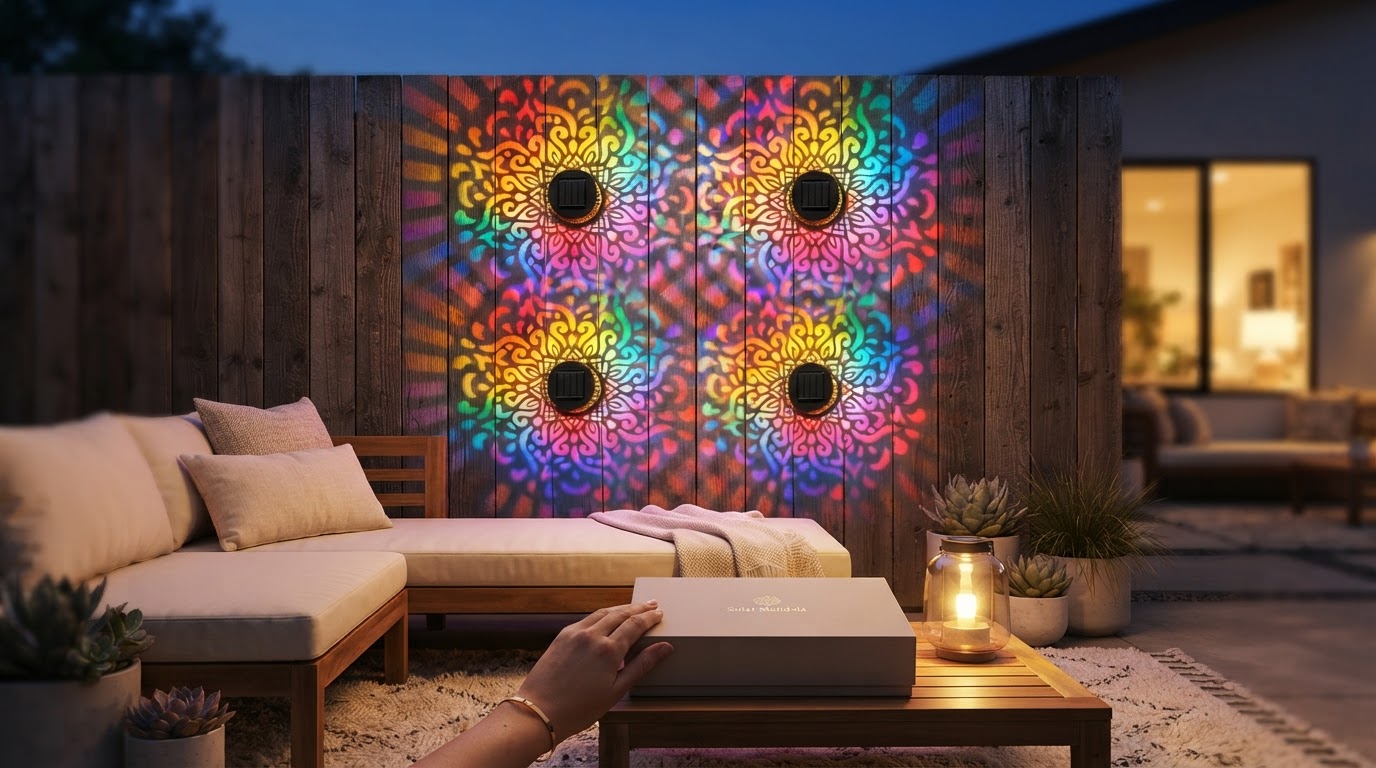
To maximize the efficacy of decorative shadow pattern solar lights, think of it as a matrix of three critical variables: surface texture, throw distance, and light temperature. Two axes matter here: the clarity of the mandala silhouette and the expansion of the light radius. Solar Mandala Lights are engineered to balance these factors, typically featuring a high-efficiency monocrystalline solar panel and an IP65 waterproof rating to ensure consistent performance in varied climates. These fixtures are designed to project patterns that expand across fences or brick walls, with some models utilizing backward-facing LEDs to turn ordinary barriers into glowing tapestries. The decision rule is straightforward: for sharp, high-contrast geometry, the light must be placed within three feet of a light-colored, flat surface. When placed in open areas, the pattern softens, creating a subtle, ambient wash. Once you see it this way, it becomes clear that the light is merely the medium, while the garden’s existing structures—walkways, siding, or foliage—act as the canvas. By coordinating outdoor mandala projection lights with specific architectural features, the resulting shadow work creates a sense of depth that standard stakes cannot achieve. Understanding how Solar Mandala Lights project patterns on walkways allows for a more rhythmic placement that guides the eye through the landscape.
Expert tip: To maintain the crispness of the mandala pattern, clean the external laser-cut housing monthly. Dust or debris trapped in the lattice can distort the geometric precision of the shadow, reducing the visual impact of the projection.
Integrating these fixtures requires a holistic view of the nightscape. By designing immersive gardens with Solar Mandala Lights, you can create distinct zones of tranquility. When selecting projection pattern walkway lights, prioritize units with a higher lumen output to ensure the pattern remains visible against competing ambient light sources.
Sources
- Solar Shadow Light - Solaz Designs
- Decorative Solar Pathway Lights with Sunflower Shadow - Pack of 6 - eBay
- This backward-facing solar light turns an ordinary fence into glowing ...